Global Roaming Without Limits: One International eSIM That Works Everywhere
What if you could switch between mobile networks in different countries without ever swapping a physical SIM card? An international eSIM is a digital SIM profile that lets you activate a cellular plan from a global provider, connecting you to local networks wherever you travel. It works by downloading a data package onto your device’s embedded chip, allowing you to instantly access service upon arrival. The core benefit is seamless global connectivity without the hassle of hunting for local SIMs or paying exorbitant roaming fees.
Breaking Free from Roaming Fees: The Modern Traveler’s Connectivity Shift
Breaking Free from Roaming Fees: The Modern Traveler’s Connectivity Shift relies on activating an international eSIM before departure, ensuring you never land in a country hit with unexpected daily charges. By installing a data-only eSIM profile, you bypass your home carrier’s billing systems entirely, paying a fixed local rate for the region. This shift means you can toggle between plans—for example, switching from a Japan eSIM to a global one—without swapping physical SIMs or visiting a store. The practical result is consistent, affordable connectivity for maps, translation, and messaging, directly cutting out the cost and inconvenience of traditional roaming.
What a Global Mobile Profile Actually Does
A global mobile profile, embedded in an eSIM, functions as a singular digital identity that replaces multiple physical SIMs when traveling. It automatically connects to an array of local carrier networks in each country, selecting the strongest signal without requiring user intervention. This profile stores encrypted authentication credentials, enabling seamless handoffs between towers and nations, much like a home network handover. It effectively virtualizes the roaming agreement chain, abstracting it into a single, always-active slot on your device. This eliminates the need to swap cards, hunt for local shops, or manage separate bills, as all data is bundled under one unified plan. The profile also manages data routing, ensuring traffic is locally terminated to avoid backhaul delays. A global mobile profile is the connective fabric that binds multiple regional operators into one friction-free experience.
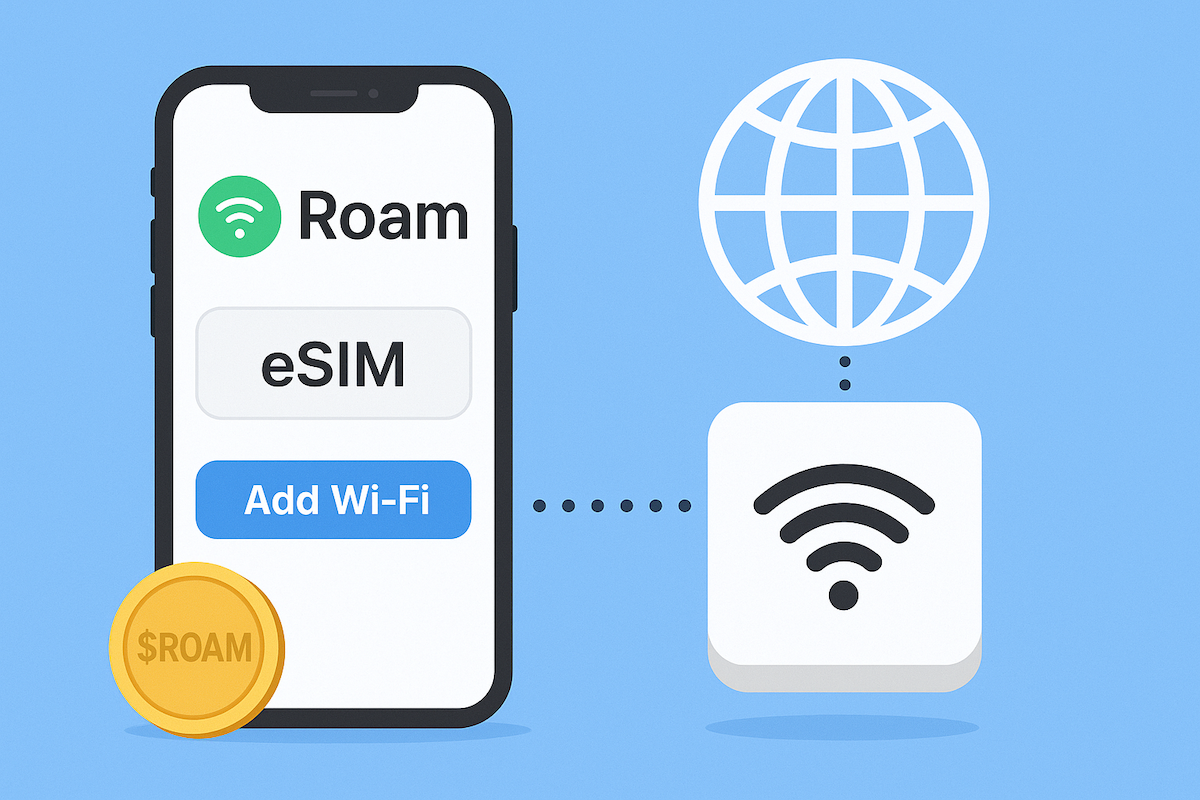
A global mobile profile is a single, pre-loaded digital identity that automatically connects your device to the best local network in any country, removing the need for physical SIM swaps or manual carrier selection.
Why Local SIM Cards Are Becoming Obsolete for Frequent Flyers
For frequent flyers, the ritual of swapping local SIM cards has become a logistical relic. Each new country demands hunting for a kiosk, fiddling with tiny trays, and losing your primary number for hours. This friction vanishes with eSIM technology, which lets you switch networks instantly via an app. You no longer juggle multiple physical cards or risk losing the one for your home country. Instead, a single eSIM profile stores multiple data plans, so landing in Tokyo or Berlin means one tap, not a airport scavenger hunt. This shift makes local SIMs feel like a burden for frequent travelers, adding unnecessary steps to an otherwise seamless journey.
Key Differences Between Physical SIMs and Embedded Modules
The core difference lies in hardware versus software. A physical SIM is a removable plastic card you swap between devices, while an eSIM is a soldered chip permanently embedded in your phone. This means activating an international eSIM happens instantly via a QR code or app—no hunting for a tiny tray or risking losing your home SIM. With a physical card, you’re stuck waiting for delivery or visiting a local store. An eSIM lets you store multiple profiles on one device, switching networks without ever touching a physical component.

Q: Can I use my phone normally with an eSIM?
A: Absolutely. Once you install an eSIM profile, it works just like a physical SIM for calls, texts, and data, except it’s invisible and can’t be physically damaged or lost.
Choosing the Right Provider for Cross-Border Use
When you’re hopping between countries, your eSIM provider must be your silent ally, not a source of dropped maps. I learned this the hard way after signing up for a budget card that promised “global” but throttled me in rural Italy. Now, I vet providers by checking native coverage—do they use local towers or just roam on one big network? A true cross-border pro offers a single profile with local APNs per region, so you switch cities without reconfiguring. How do you test if a provider’s “global” plan really works for border hopping? Answer: Buy a short-term plan for a trip with three borders—if your speed drops at the second crossing, look elsewhere. Prioritize providers that let you top up data midway, not just pre-load; flexibility matters when your train crosses from France into Switzerland and back.
Top Players in the Global Data Market
When picking an international eSIM, the top players like Airalo, Holafly, and Ubigi are your go-to choices. Airalo offers massive global coverage with local plans, while Holafly dangles unlimited data in many regions. Ubigi is a strong contender, especially with its reliable speeds across Asia and Europe. All three provide app-based management, making activation simple. For travel, you’ll want a provider with broad regional networks to avoid spotty connections abroad. GigSky also stands out for multi-country trips with flexible top-ups.
Stick with Airalo, Holafly, or Ubigi for dependable global data—each excels in specific regions for seamless cross-border use.
Comparing Pay-As-You-Go Plans vs. Subscription Models
When choosing between pay-as-you-go plans and subscription models for international eSIM, your travel frequency dictates the best value. The pay-as-you-go vs subscription comparison hinges on data usage predictability. For a single trip, a pay-as-you-go top-up provides zero long-term commitment and expires automatically. Frequent travelers benefit from a subscription, which locks in a per-gigabyte rate lower than one-off purchases. To decide:
- Estimate your total monthly data needs across borders.
- Calculate the cost of a one-time top-up for that amount.
- Compare it to a monthly subscription’s recurring fee for the same data.
- If the subscription cost is lower, commit; otherwise, stay flexible with pay-as-you-go.
Coverage Zones: Regional Bundles Versus Worldwide Packs
When selecting an international eSIM, your coverage choice directly impacts cost and convenience. Regional bundles are ideal if your travel is concentrated within a specific continent like Europe or Asia, offering strong local network ties and lower per-gigabyte costs. Conversely, worldwide packs provide seamless multi-country access through a single profile, perfect for erratic itineraries or global nomads. The trade-off is simple: regional plans reward focus with better value, while global packs prioritize flexibility and elimintate zone-switching. Always match your travel pattern—static region or globe-trotting—to the corresponding coverage zone to avoid overpaying for unused reach or needing multiple eSIMs mid-trip.
| Aspect | Regional Bundle | Worldwide Pack |
|---|---|---|
| Cost per GB | Lower (local partnerships) | Higher (roaming agreements) |
| Best For | Single-continent trips | Multi-country, unpredictable travel |
| Activation | Zone-specific eSIM | Single eSIM for global use |
Hidden Costs: Activation Fees, Top-Ups, and Data Throttling
When selecting an international eSIM, the ticket price often masks sneaky budget traps like activation fees. A “free” eSIM might hit you with a surprise charge just to start the service. Similarly, top-ups can be deceptive; some providers require minimum top-ups that exceed your actual need, leaving you with expired credit. Then there’s data throttling—after burning through a small “high-speed” cap, your connection might grind to 2G speeds, rendering maps or messaging frustratingly slow. Always check the fine print on speed reduction thresholds.
Q: Can I avoid throttling by buying the largest data pack?
A: Not necessarily. Many plans throttle all users indiscriminately after a specific data cap, regardless of pack size. You must verify if the plan offers “full-speed data” for the entire allowance or if throttling kicks in earlier.

Setting Up Multi-Country Connectivity Without a Physical Card

Setting up multi-country connectivity without a physical card means you can activate international eSIM plans entirely via a QR code or app download before you travel. You simply buy a global data package from a provider, scan the code into your phone’s settings, and the eSIM profile installs instantly. No need to hunt for local SIM shops or swap plastic cards between borders. You can often top up or switch countries from the same provider’s app, so switching from, say, a regional Europe plan to an Asia-Pacific one takes just a few taps. Your original home SIM stays in the tray for calls and texts while the eSIM handles roaming data seamlessly across multiple destinations.
Compatible Devices: From Recent iPhones to Android Flagships
Setting up multi-country connectivity without a physical card requires a compatible device. Recent iPhones, starting from the iPhone XR, XS, and Singapore eSIM SE (2020) onward, all support eSIM, enabling dual SIM use with a physical card. Android flagships like the Google Pixel series (from Pixel 3), Samsung Galaxy S20 and later, and the recent OnePlus models also natively integrate eSIM. eSIM compatibility is not universal across older models, so checking your phone’s settings for “Add eSIM” is essential. Some Android flagships sold in certain regions may still lack eSIM support despite the hardware. A quick compatibility check prevents setup frustration when activating international eSIM data plans.
Step-by-Step Activation via QR Code or App
Activation begins by scanning a QR code for eSIM setup provided post-purchase, which automatically installs the profile onto your device. Alternatively, within the provider’s app, you select the plan and tap “add eSIM,” allowing the app to push the configuration directly. After installation, you enable the line in cellular settings and assign it for data, while keeping your primary SIM active for calls. The eSIM profile activates upon connecting to a local network in your destination country, requiring no physical card insertion.
Step-by-step activation involves either scanning a QR code or using a provider app to install and enable the eSIM profile, with data connectivity commencing automatically upon arrival abroad.
Managing Multiple Profiles for Different Destinations
Managing multiple profiles for different destinations lets you preload several eSIMs and switch between them without swapping physical cards. Local profile activation per country ensures you always connect to the most cost-effective local network. Before traveling, purchase and install profiles for each region you plan to visit. When you cross a border, simply select the appropriate profile in your phone’s settings. This approach eliminates the need to hunt for a new eSIM upon arrival at each destination.
- Install a separate eSIM profile for each country before departure.
- Label each profile with the destination name to avoid confusion.
- Toggle between profiles instantly in your device settings when crossing borders.
- Keep your primary home profile active for iMessage or WhatsApp, while using local data profiles for internet access.
Navigating Data Speeds and Network Priorities
When using an international eSIM, navigating data speeds means understanding that you’re often a guest on local networks, which can deprioritize your traffic behind their own subscribers. This “deprioritization” typically causes slower speeds during peak hours. It’s not a throttle, but a network priority shift—your video may buffer while a local user’s streams smoothly. Quick Q&A: “Why is my eSIM suddenly sluggish at noon?” “Because local users get first dibs on tower capacity; try switching your phone to a 4G-only mode to avoid even slower 5G traffic jams.” For practical workarounds, manually selecting a less congested local operator in your eSIM app can improve real-world speeds. Always check if your plan offers “priority data” or “premium” access, as that directly affects your speed ranking versus local users.
5G Availability in Foreign Markets
When you travel, 5G access abroad depends heavily on your provider. Not all international eSIMs automatically connect to local high-speed bands, so check your plan’s coverage map before you land. In many Asian and European cities, 5G is practically a given, but in rural parts of the Americas or Africa, you’ll often drop to 4G. Your phone’s modem also matters—older models might miss certain regional frequencies entirely. To avoid surprises, toggle 5G on only when you need heavy downloads; otherwise, keep automatic network selection active.
Understanding Fair Use Policies for Unlimited Plans
Understanding fair use policies for unlimited plans is critical when using an international eSIM, as these plans are never truly unlimited. Providers enforce a high-speed data cap, typically 50–100 GB per month, after which speeds throttle to 128–256 kbps for the remaining billing cycle. This means streaming video or large downloads become impractical post-throttle. Exceeding the cap during peak network hours can trigger an earlier reduction in priority. Always check your provider’s specific fair use threshold before heavy usage, as video streaming and VoIP calls draw the most data. Monitoring your consumption through the eSIM’s app prevents sudden slowdowns.
Fallback Options When Primary Providers Struggle
When your primary international eSIM provider buckles under network congestion or fails to connect, surge capacity from a secondary eSIM profile as a dynamic fallback solution. Switch instantly to a different local carrier embedded in a multi-profile eSIM, or activate a backup plan from a separate provider optimized for voice and SMS when data chokes. Prioritize plans offering real-time switching between partner networks to bypass overloaded towers.
- Preload a lightweight secondary eSIM from a rival carrier before travel.
- Enable automatic network selection to jump to an underused band.
- Sideload a local prepaid eSIM as a dedicated tethering fallback.
- Use a pay-as-you-go eSIM that charges only when primary fails.
Optimizing Usage for Business Travelers and Digital Nomads
For business travelers, optimizing an international eSIM means pre-loading multiple regional profiles before a trip to avoid losing connectivity during layovers. A digital nomad adjusts this by prioritizing local-data-heavy plans over voice minutes, as Zoom calls and cloud uploads drain allowances faster than casual browsing. At a Lisbon co-work, I pair my eSIM with a messenger app’s data-saving mode for uninterrupted client communication on the go. One overlooked trick is setting your phone to “low data mode” only when roaming, not your home carrier, to stretch the eSIM’s GBs for essential work tasks—this preserves battery while ensuring Slack notifications and maps stay live across time zones.
Keeping Local Numbers Active with Dual SIM Features
For business travelers and digital nomads, maintaining local number accessibility becomes seamless with dual SIM features. By pairing a physical SIM for your home number with an international eSIM, you can keep your local line active for calls and verification codes without swapping cards. This setup ensures contacts and banking alerts reach you on your original number, while data roams via the eSIM at local rates. You simply configure the phone to use the eSIM for internet and the physical SIM for voice, preserving professional continuity and avoiding missed connections abroad.
Voice Over IP Alternatives for Calling Home
For business travelers and digital nomads using an international eSIM, Voice over IP (VoIP) alternatives like Skype, WhatsApp, or Google Voice are essential for affordable calling home. Unlike direct mobile calls that drain eSIM data allowances with high per-minute rates, VoIP services use your eSIM’s data connection to make low-cost or free calls over Wi-Fi or cellular. To optimize usage, configure your phone to route all international calls through a VoIP app, ensuring you avoid operator surcharges. Some apps also support local virtual numbers, letting contacts reach you without long-distance fees. Pre-purchased Skype credit or a Google Voice balance provides a backup when recipient networks block standard VoIP.
VoIP alternatives allow nomads to call home cheaply by routing voice over their eSIM’s data connection, avoiding expensive carrier per-minute rates.
Security Considerations When Switching Carriers Abroad
When switching carriers abroad via eSIM, secure eSIM profile management is critical. Always delete dormant profiles from your device to prevent unauthorized access if a carrier is compromised. Use only the eSIM provider’s official app for installation, avoiding QR codes from unverified sources to mitigate phishing risks. Be aware that roaming across networks exposes you to SS7 vulnerabilities; use a VPN to encrypt traffic and disable automatic carrier selection to control which towers your device connects to.
- Remove old eSIM profiles immediately after deactivation to close potential backdoors.
- Install eSIMs exclusively through provider apps, not public QR codes or emails.
- Activate a VPN before roaming to protect data from SS7 interception attacks.
- Manually select a network in settings to avoid falling onto rogue or insecure towers.
Common Pitfalls and How to Avoid Them
A major pitfall is assuming your eSIM will activate instantly upon landing; activation often requires a stable internet connection, leaving you stranded without data. Avoid this by installing the eSIM profile before your trip while still on Wi-Fi. Another common mistake is forgetting to disable your primary home SIM’s data roaming, which can trigger exorbitant charges—set your primary line to “off” for data.
The key insight is to run a quick connectivity test immediately after activation, while you still have airport Wi-Fi, so you can troubleshoot provider support before heading into a dead zone.
Finally, many users overlook eSIM compatibility with mid-range or older phones; always verify your device’s IMEI supports eSIM technology before purchasing a plan.
Incompatibility with Older Handsets or Locked Devices
A primary pitfall is assuming any phone supports international eSIM. Many older handsets lack eSIM hardware, rendering them entirely incompatible. Similarly, a carrier-locked device prevents adding a foreign eSIM profile, even if the hardware supports it. To avoid connectivity failure, first confirm your phone model is eSIM-compatible via the manufacturer’s site. Then, verify the device’s lock status through your carrier’s settings or by inserting a foreign physical SIM to test for an unlock prompt. If locked, request an unlock from your current carrier before traveling.
- Check the phone’s official specs for eSIM support.
- Confirm the device is unlocked by testing another carrier’s SIM.
- If locked, contact the carrier to request a permanent or temporary unlock.
Time Zone Missteps During Plan Activation
When activating an international eSIM, incorrect time zone assumptions can immediately waste your plan’s validity. Providers typically count activation time from your chosen local time, not your current location. If you activate while physically in a later time zone, your plan’s active window may expire earlier than expected, cutting your coverage short. Always set your device to the provider’s server time or the target country’s zone before tapping “Activate.” Double-check the conflict between your home time and destination time to prevent premature plan expiration. This subtle misstep frequently turns a seamless connection into a shortened, unreliable service period.
Overlapping Subscriptions Leading to Double Charges
When juggling multiple eSIM profiles for travel, overlapping subscriptions leading to double charges is an easy trap. You might keep your home eSIM active while adding a local data plan, forgetting to disable automatic network selection. This can cause your phone to briefly hop onto a roaming partner’s tower, triggering a daily fee from your old carrier on top of the new plan’s cost. Avoid this by manually turning off your primary eSIM’s data roaming in settings, or by removing the home line entirely for the trip. A quick double-check before crossing a border saves you an unexpected bill.
Future Trends in Borderless Mobile Access
Future trends in borderless mobile access pivot on universal profile embedding directly into device hardware, eliminating the need to scan QR codes or install app-specific profiles upon arrival. This evolution enables seamless, automatic network switching based on real-time signal strength and cost, without user intervention. A key insight is that
the next stage removes the concept of “home” and “roaming” entirely, treating all global networks as a single, user-configured mesh accessible from device activation.
This shift turns the international eSIM from a pre-travel purchase into a persistent, always-on connectivity layer, with dynamic data pooling and localized number attribution handled silently by the device’s native SIM toolkit.
Evolving Partnerships Between Chipmakers and Telecoms
Evolving partnerships between chipmakers and telecoms now embed multi-network eSIM profiles directly into device hardware, eliminating manual carrier selection. This integration allows a single chip to provision a phone with local or global data before the user powers on, using a unified API between the silicon and the telecom’s OTA platform. The typical sequence is:
- Chipset embeds an eSIM operating system with pre-loaded carrier credentials.
- Telecom’s provisioning server authenticates the device via the chip’s unique identifier.
- User sees an active roaming-ready connection upon first boot.
This reduces setup friction and enables seamless borderless access without separate app downloads or QR scans.
The Role of Satellite Integration in Remote Areas
For international eSIM users, satellite integration in remote areas transforms dead zones into active gateways. Instead of hunting for patchy local towers, your device automatically switches to satellite connectivity when terrestrial networks vanish. This creates seamless off-grid roaming for travelers, emergency workers, and explorers. A typical sequence unfolds as:
- Your eSIM detects no terrestrial signal and triggers the satellite fallback.
- The system negotiates low-bandwidth data or SMS via LEO satellites.
- You continue basic communication—messaging it or sharing GPS coordinates—without swapping SIMs.
This integration ensures that remote mountain trails, ocean crossings, or desert expanses no longer mean total disconnection from your core mobile identity.
Potential Regulation Shifts Impacting Global Data Fees
Potential regulation shifts could directly lower your global data fees by forcing local carriers to offer wholesale rates to eSIM providers. A ruling mandating “access parity” might erase the premium you currently pay for roaming, making data costs nearly identical to local plans. Yet, diverging compliance frameworks across regions could paradoxically introduce new fees for re-authentication. Regulatory-driven data cost compression would make eSIMs the default for frequent travelers, eliminating the need for multiple physical SIMs. Q: Will regulations truly cut my long-term data costs? A: If open-access rules pass, expect a rapid drop in per-gigabyte fees, especially in high-margin roaming markets.
What Exactly Is an International eSIM and How Does It Work?
The Core Difference Between a Physical SIM and a Remote Profile
How Data Roaming Happens Without Swapping Cards
Key Features That Make a Global eSIM Stand Out
Multiple Network Profiles Stored on a Single Chip
Instant Activation and Remote Provisioning
Compatibility with Dual SIM Dual Standby Phones
Who Benefits Most from Using a Worldwide Roaming eSIM
Frequent Flyers and Digital Nomads
Travelers Visiting Multiple Countries in One Trip
Temporary Relocation or Long-Term Backpacking

How to Choose the Right International Data Plan for Your Needs